Alternative Void-Filling Solution for NEOM Harbour Repairs
The Task
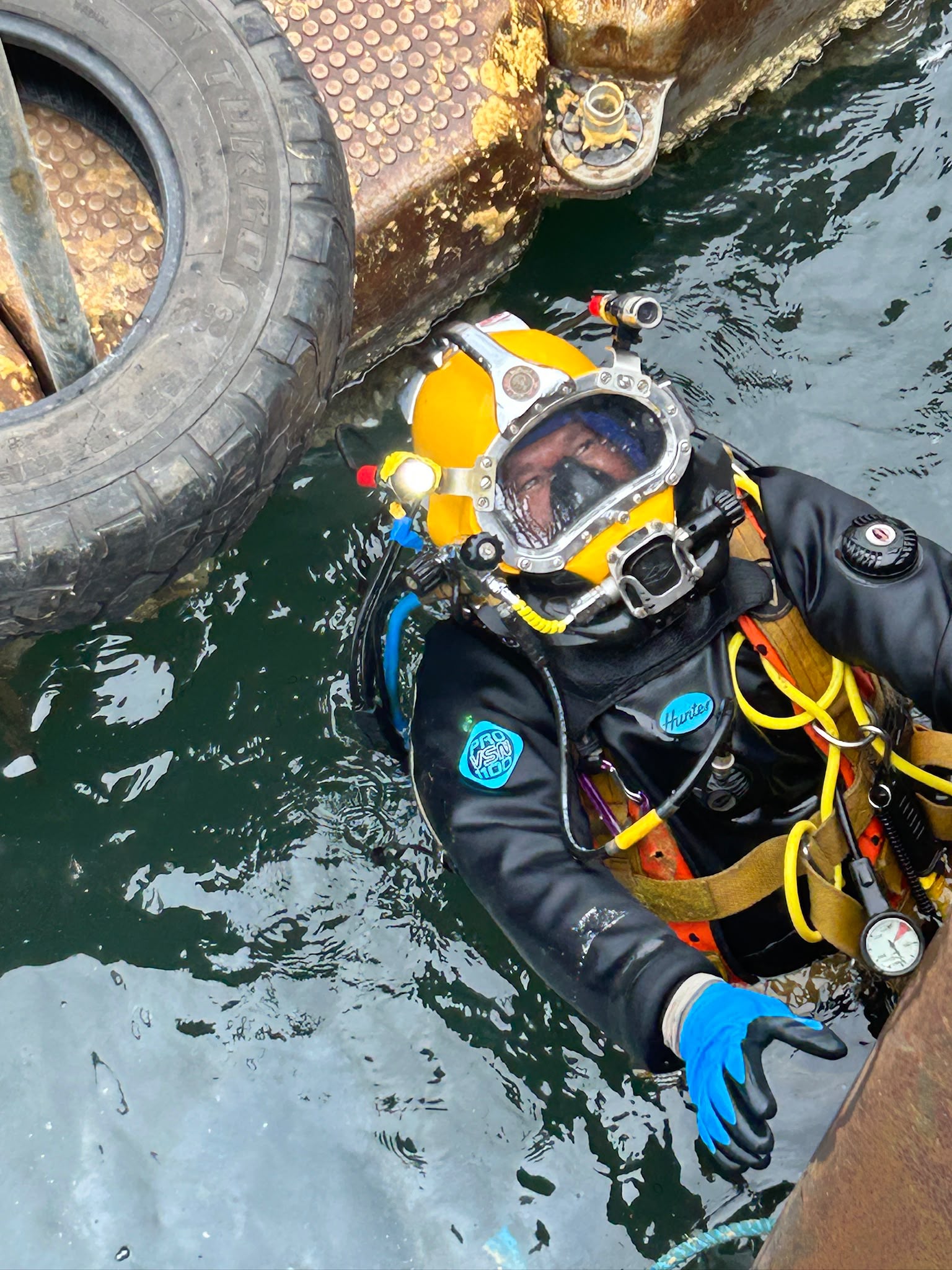
LCM Environmental was engaged by PM Divers, supporting NEOM Engineering on a major harbour infrastructure project involving the installation of new steel sheet piling in front of an existing quay wall.
During construction, it became clear that the annular void between the new and existing steelwork varied considerably, with many gaps measuring less than 15 mm. This meant grout hoses could not be installed in line with the original design specification, making conventional cementitious grouting impractical.
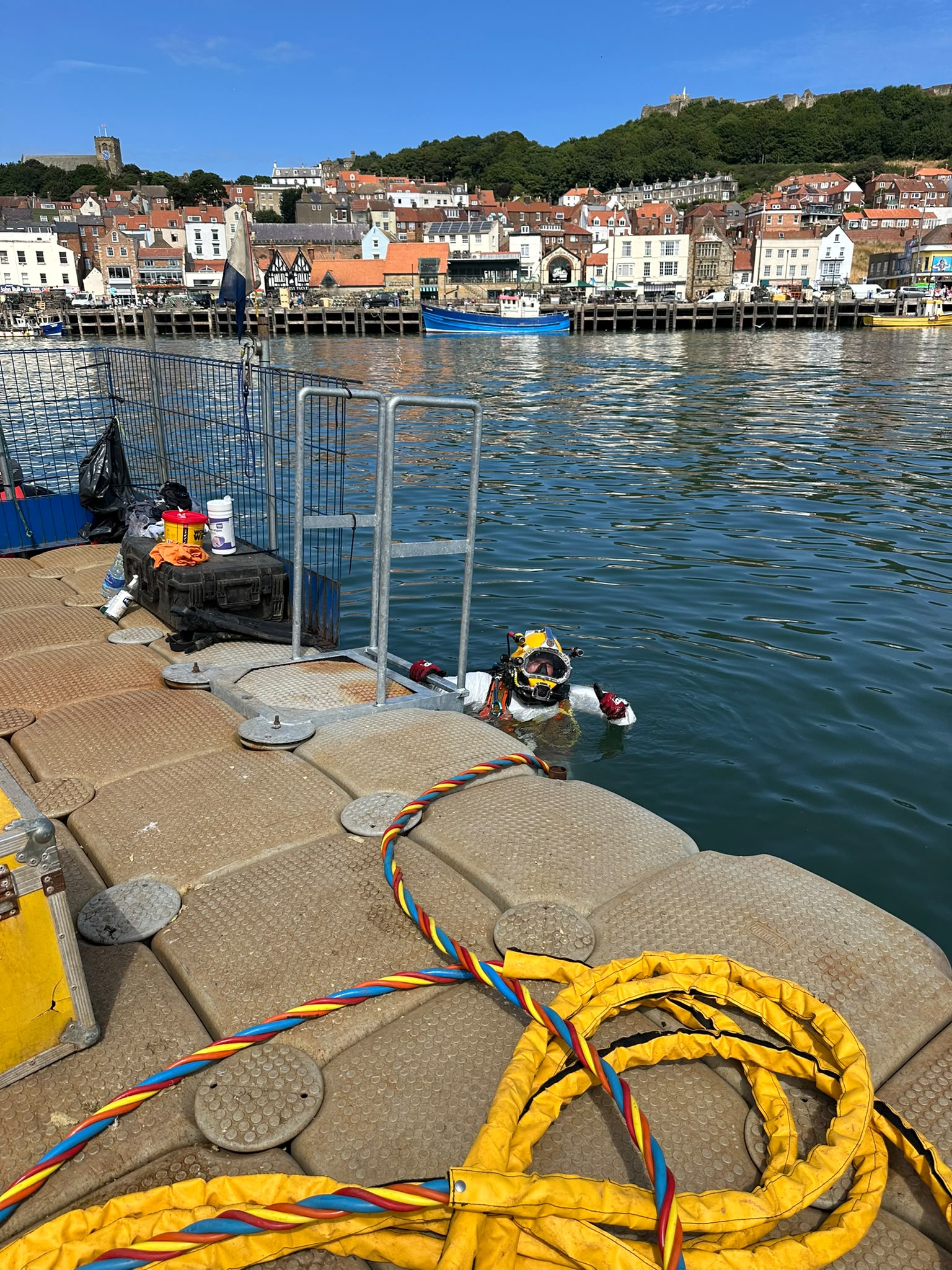
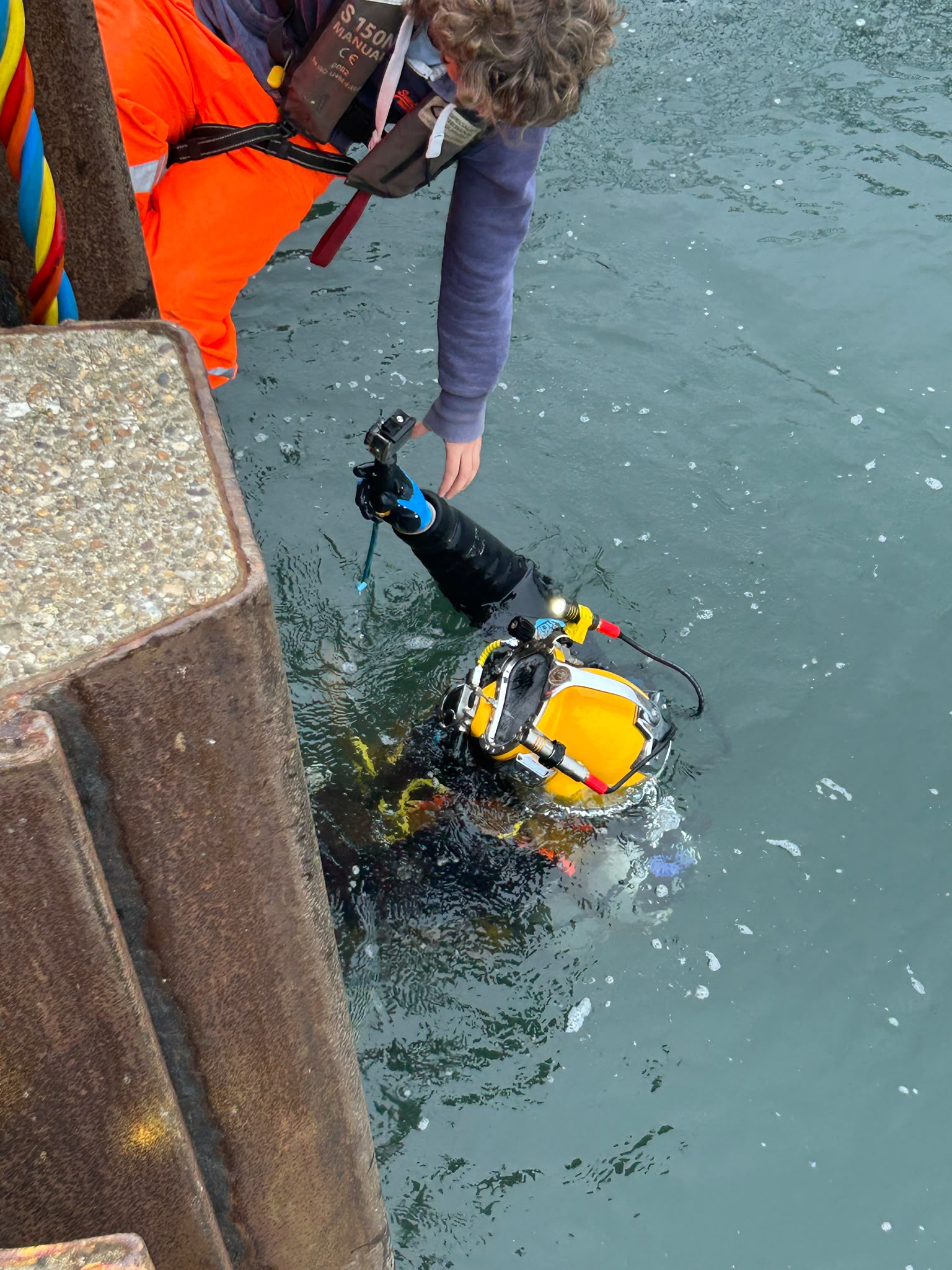
The top and bottom of the cavity also remained open, so both needed to be sealed before filling could begin. Divers were available to access the underside of the plates where required.
NEOM had considered a proprietary grout sock system, but the cost and lead time risked delaying the programme. PM Divers therefore approached LCM to develop a more practical, cost-effective alternative that could be mobilised quickly while still meeting the corrosion protection objectives.
Developing the Solution
Working alongside Roman, Dan and Steve from Newton Waterproofing, LCM evaluated a polyurethane foam injection system previously developed for filling inaccessible voids around steel structures.
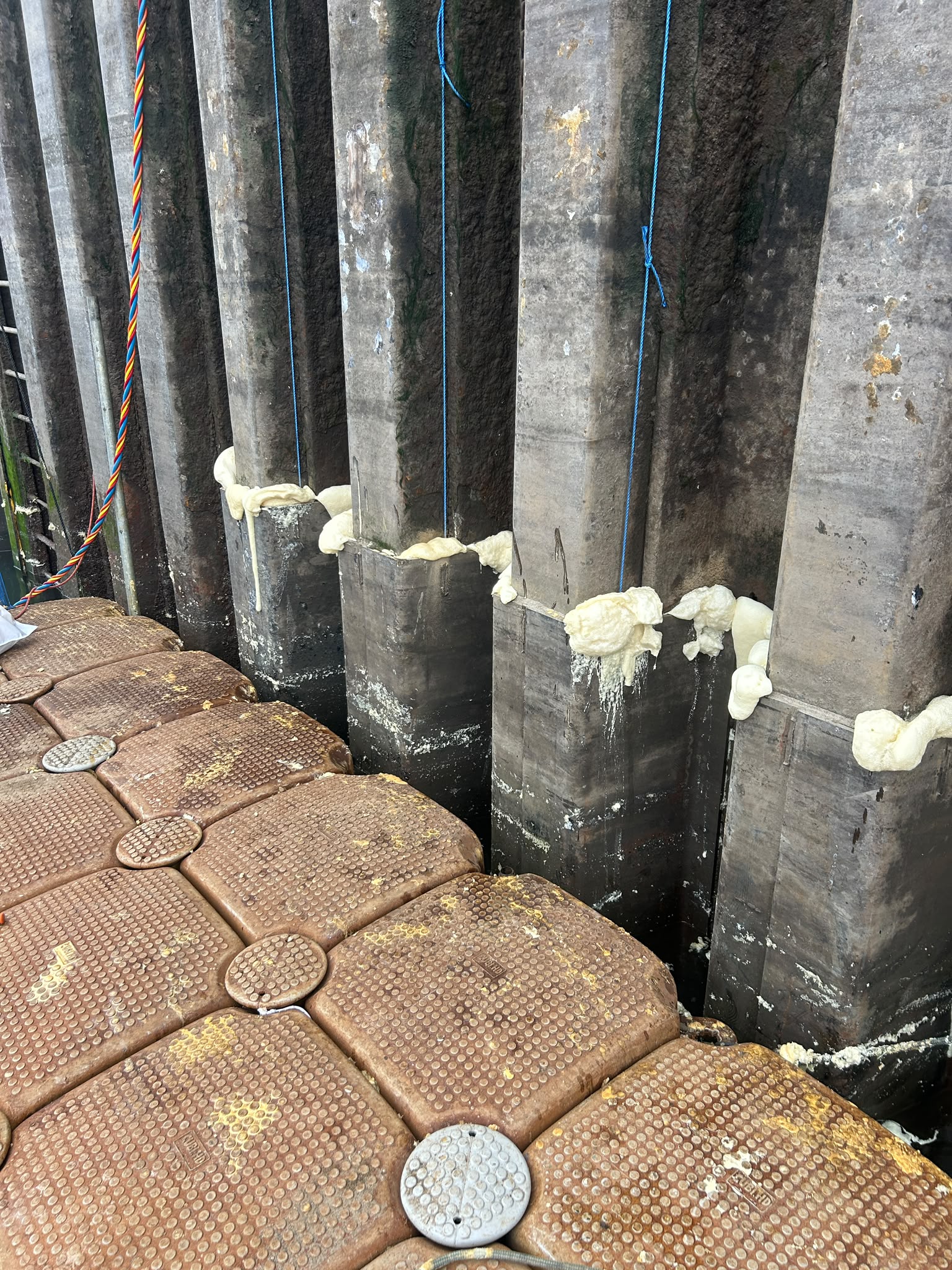
The engineering objective was not structural support. The aim was to remove the seawater and oxygen present within the cavity between the new and existing sheet piling.
Because corrosion requires both moisture and oxygen, completely occupying the void with a closed-cell polyurethane foam would significantly reduce the corrosive environment and help protect both steel surfaces over the long term.
Trial Programme
A series of workshop and field trials were carried out to establish whether the foam could be delivered over the required 15-metre hose length while maintaining the correct mix ratio and expansion performance.
Several modifications were made to the pumping equipment, injection lances and catalyst ratios. The system needed enough open time for the material to travel through the delivery hose and penetrate voids as narrow as 15 mm before expansion began.
Testing covered:
- optimum catalyst dosage for expected ambient temperatures
- material volumes required for voids as small as 15 mm
- expansion characteristics within restricted cavities
- pumping sequence to minimise trapped air pockets
- sealing methods for upper and lower openings to ensure complete containment during pumping
Trial sections were produced using a wooden mock-up and 4-metre lengths of ducting. This confirmed that the foam expanded uniformly without creating excessive pressure on the steelwork.
The models were then cut open to verify complete filling and identify any areas requiring further refinement.
Foam Pumping Process
Following successful trials, the final methodology involved:
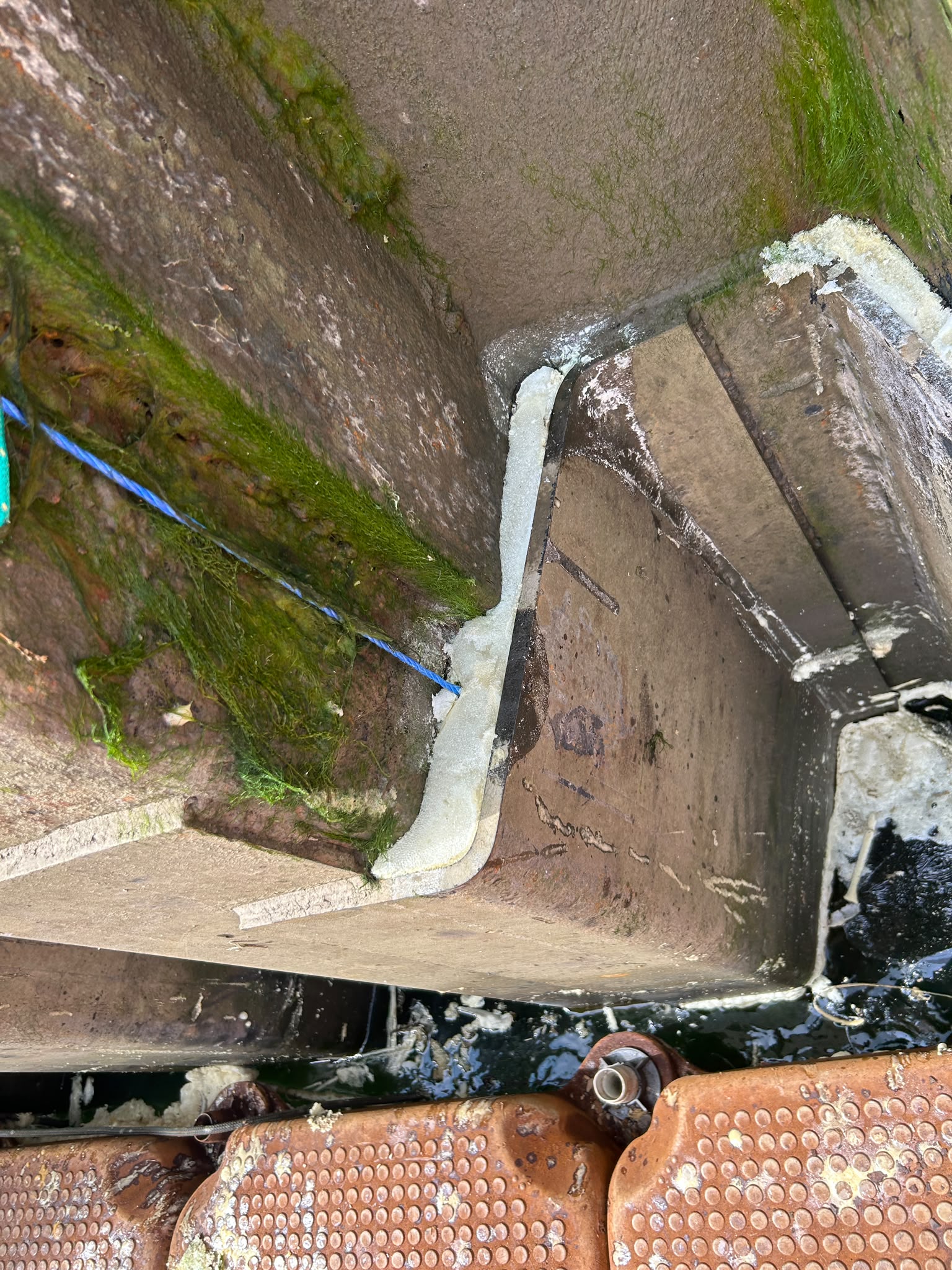
- Sealing the lower edge of the cavity using diver-installed temporary seals to prevent product loss.
- Pumping two-component closed-cell polyurethane foam through approximately 15 metres of hose from equipment positioned on the quayside.
- Pumping at different time intervals depending on void size, starting at the lowest point so the expanding foam progressively displaced seawater and air.
- Monitoring adjacent void points until foam was observed, confirming complete filling before moving to the next section.
- Trimming and sealing completed pumping points after curing.
The controlled expansion of the polyurethane foam allowed narrow, inaccessible voids to be filled where traditional cementitious grout could not be used.
Outcome
Following a number of equipment modifications and process refinements, the adapted pumping system proved capable of filling the restricted voids efficiently and consistently.
The solution removed the need for costly specialist grout sock systems, reduced installation time and helped keep the project on programme.
Most importantly, it provided a practical way to isolate the steel surfaces from seawater and oxygen, significantly reducing the conditions required for corrosion to develop within the enclosed cavity.
The project also demonstrated the value of collaboration between PM Divers, Newton Waterproofing and LCM’s engineering team. By adapting an existing technology, testing it properly and refining the process around the site conditions, the team was able to deliver a practical solution to a complex marine infrastructure challenge.