LED Lighting
LED lighting in industrial environments is a critical operational system, supporting safe movement, task visibility, and reliable day-to-day operations. LCM Environmental provides the supply and installation of LED lighting, primarily as part of planned upgrade or retrofit programmes within industrial facilities.

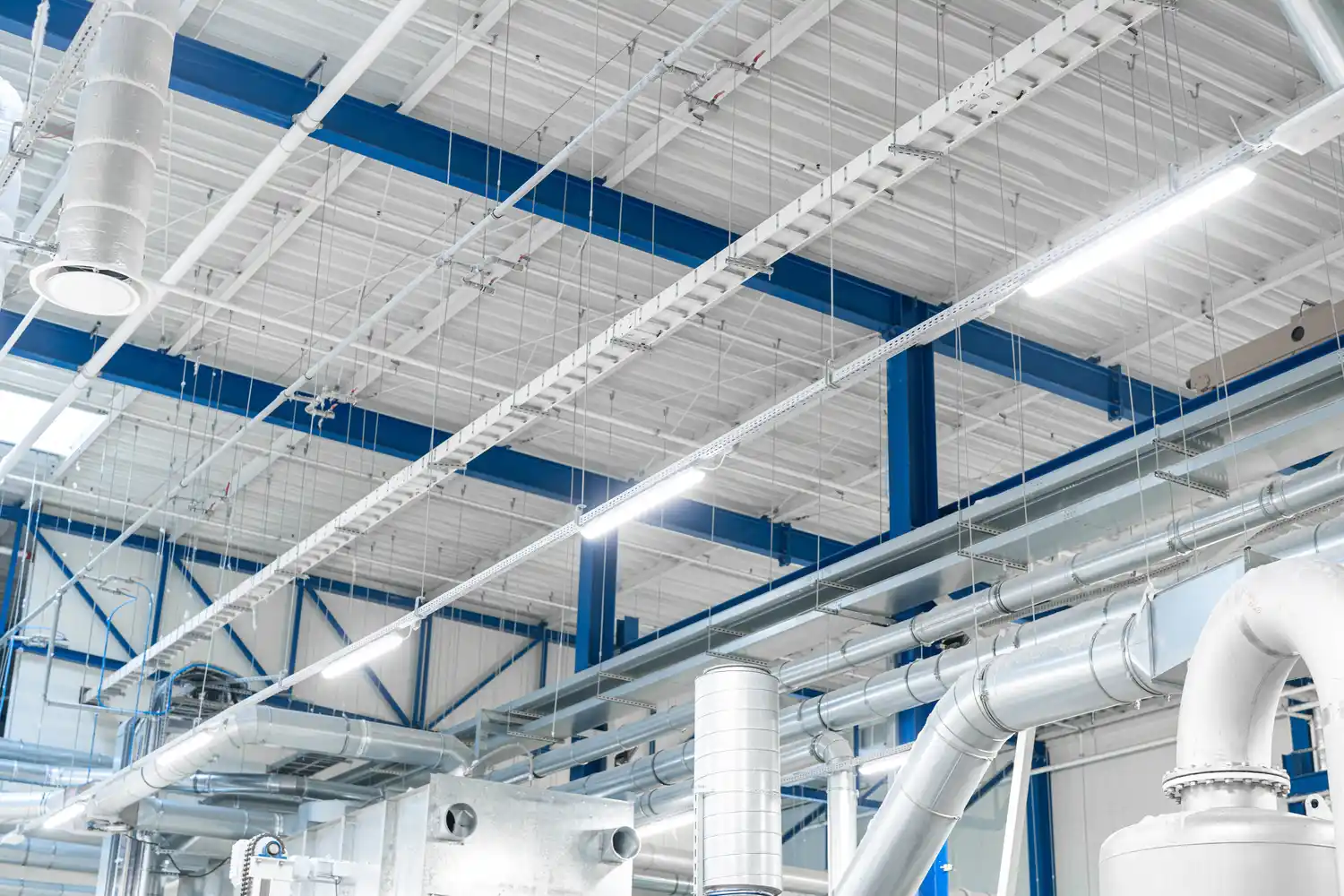
Overview
Organisations typically adopt LED lighting to improve energy efficiency, reduce maintenance demands, and increase lighting reliability across working areas. In industrial settings, consistent light levels can support safer working conditions, clearer visibility around plant and equipment, and improved operational confidence for site teams.
Emergency lighting can be included within LED upgrade works, although the extent varies by project. This may involve direct replacement of existing fittings, integration with retained systems, or commissioning activity where required.
The service is delivered with consideration for live environments, access constraints, and site-specific requirements. Scope, controls, and supporting documentation are confirmed in advance to ensure the works align with operational needs, compliance obligations, and long-term asset management objectives.

Why This Service Matters
Lighting failures or inadequate lighting levels can introduce operational risk, increase maintenance interventions, and affect safety across industrial sites. Poorly performing legacy systems may also result in higher energy costs and limited audit visibility.
In industrial environments, lighting supports safe access routes, working areas, and emergency egress. Where systems are outdated or inconsistent, this can place additional pressure on facilities teams and complicate compliance management.
Planned LED lighting upgrades allow organisations to address these issues in a controlled manner. By improving reliability and maintainability, lighting can be aligned more closely with operational use rather than becoming a reactive concern. When emergency lighting is involved, clear scope definition helps ensure that safety-critical elements are appropriately managed and documented.

Initial site survey
or asset review to understand existing lighting arrangements

Support with lighting specification
or layout requirements, where agreed

Planning of access
plus permits, RAMS, and sequencing around live operations

Supply and installation
of LED lighting equipment

Commissioning checks
and functional verification, where applicable

Provision of handover information
or documentation, where required

Compliance, Standards & Governance
Lighting installations may have compliance implications depending on scope and site use. Where lighting levels are designed or altered, relevant standards such as BS EN 12464-1 may apply. Where emergency lighting is installed, modified, or integrated, BS 5266-1 may be relevant.
If electrical circuits are extended or modified as part of the works, requirements under BS 7671 may apply.
LCM Environmental approaches LED lighting works with governance and audit visibility in mind. Documentation, test results, or supporting records can be provided where required to support internal audits, inspections, or insurer requirements. The specific compliance context is confirmed during scoping.

Typical Use Environments
LED lighting services are typically delivered within industrial settings, where reliability and durability are critical. Examples may include:
• Warehousing and logistics facilities
• Manufacturing and processing environments
• Plant rooms, service corridors, and external working areas
The service is not positioned for domestic or purely commercial office environments unless agreed as part of a wider industrial scope.
Planned vs Reactive Use
Planned use
LED lighting is primarily delivered as part of planned upgrade or improvement programmes. This allows lighting performance, energy use, and maintenance demands to be addressed systematically.
Reactive use
Reactive replacement of failed fittings may occur where required, but this is not positioned as the core service model. Planned works provide greater control over access, safety, and documentation, reducing unplanned disruption to operations.
Related services


What happens next?
The next step is typically an initial discussion to understand the site, operational constraints, and objectives for the lighting upgrade. This may be followed by a site survey to confirm scope, access arrangements, and any compliance considerations.