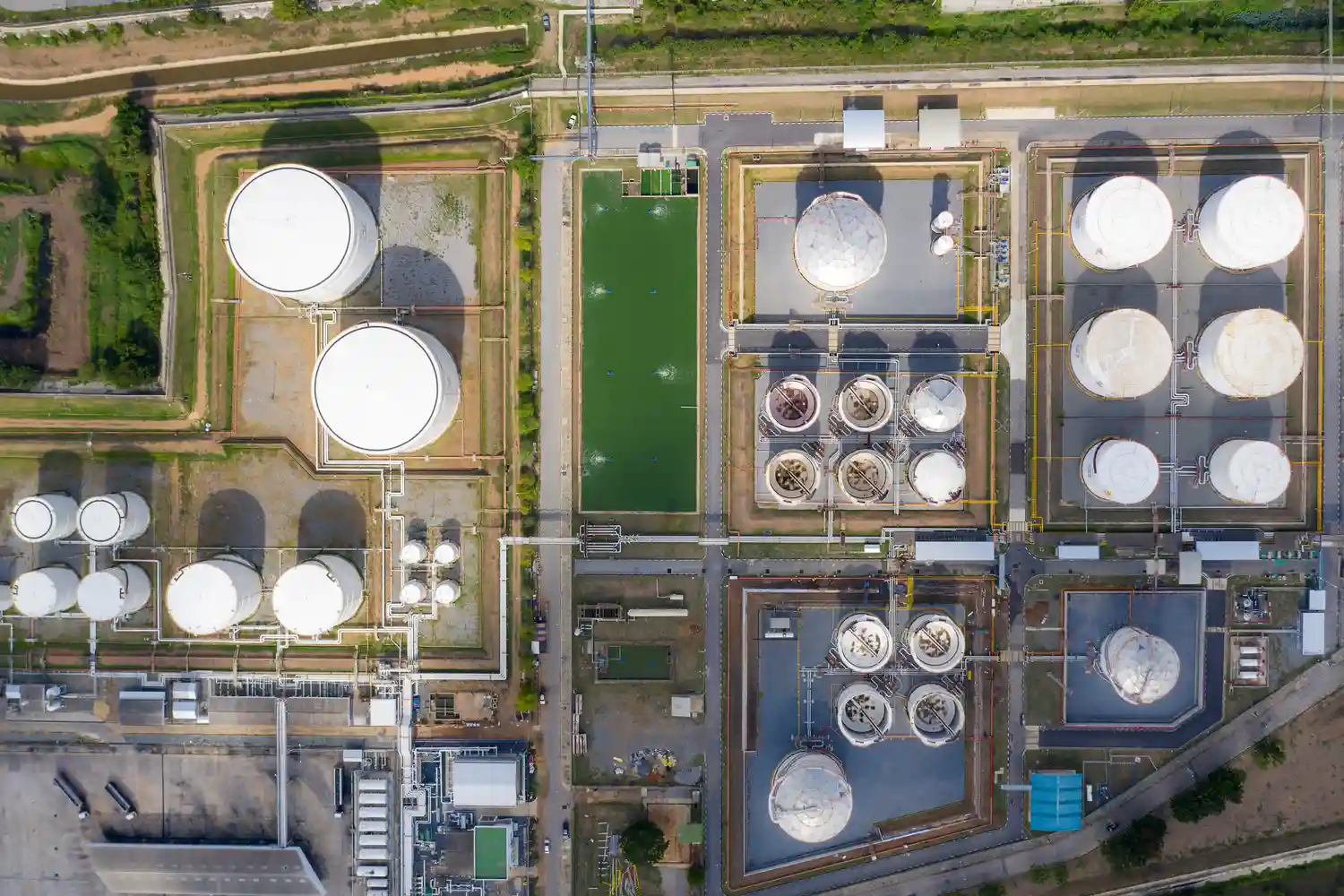
How Often Should Commercial Fuel Tanks Be Cleaned?

There is no single cleaning interval that applies to every commercial fuel tank. A tank holding regularly replenished diesel for a busy fleet will behave differently from one storing fuel for a standby generator that may only operate during testing or a power failure.
For critical infrastructure, quarterly fuel sampling is generally recommended where tanks do not have an ongoing fuel polishing system, helping to identify changes in fuel condition before they affect operational reliability.
The better question is whether the tank remains clean enough to protect the fuel, connected equipment and wider operation. That should be assessed through inspection, fuel sampling and maintenance records, rather than assuming a tank is fine because it has not caused a problem yet.
Why fuel tank cleaning matters
Over time, water, sediment and other contaminants can collect at the bottom of a fuel tank. This material may remain out of sight while clean-looking fuel is drawn from higher in the tank.
The problem often becomes noticeable when a delivery disturbs the tank contents or demand suddenly increases. Contamination can then enter pipework, filters, pumps or connected equipment, potentially causing blockages and unreliable operation.
Cleaning removes the material that routine filtration cannot always reach. It can also create the clean conditions needed for an internal inspection, repair, lining project, change of fuel or tank decommissioning.
How fuel degradation affects the tank
Fuel does not remain unchanged indefinitely. Its condition can deteriorate through prolonged storage, oxidation, temperature changes and exposure to contaminants.
Older fuel may develop sediment that settles at the bottom of the tank. In low-turnover systems, this can happen gradually without producing an obvious change at the dispensing point.
A cleaning programme should therefore consider how quickly the fuel turns over. Tanks supporting standby generators, emergency systems and other infrequently used equipment may require closer monitoring because the fuel can remain in storage for extended periods.
The effect of water ingress
Water can enter a tank through damaged seals, vents, fill points or other defects. It can also develop through condensation as the temperature inside the tank changes.
Because water is heavier than diesel, it collects at the bottom, precisely where visual checks from the top are least likely to reveal it. Left in place, it can contribute to corrosion and create the conditions required for microbial growth.
Regularly finding water in a tank is not simply a reason to remove it again. It may indicate an underlying issue with the storage system that should be investigated.
Microbial growth and sludge
Bacteria, yeasts and fungi can develop where water meets fuel. As this activity increases, it can form a layer of biomass commonly described as diesel bug.
This contamination may appear as dark sludge, stringy material or repeated debris in fuel filters. It can spread beyond the tank into pipework and connected equipment, meaning that changing filters alone may only treat the immediate symptom.
Current Ministry of Defence fuel guidance states that microbial growth develops at the fuel-water interface and that regular removal of water helps control it. The same guidance recommends tank inspection when bottom samples identify sludge or dirt capable of contaminating the stored product.
What is the recommended cleaning interval?
Commercial tanks should be cleaned according to their condition and risk profile, rather than a standard number of years.
The Ministry of Defence guidance takes this condition-led approach, stating that cleaning intervals are influenced by the stored product and, to some extent, the climate. It also identifies specific triggers for inspection, including when a tank is emptied, when bottom samples find sludge or dirt, when maintenance is needed or when microbial testing produces an unacceptable result.
For most commercial sites, a sensible maintenance approach will consider:
- The age, construction and condition of the tank
- How quickly the fuel is used and replaced
- Previous water or contamination problems
- Results from fuel samples and tank inspections
- The importance of the equipment supplied by the tank
- Manufacturer, insurer or site-specific maintenance requirements
A critical generator tank with low fuel turnover may need more active oversight than a tank whose contents are replenished frequently. Regular fuel sampling and testing can help identify water, particulate contamination, microbial activity and degradation before deciding whether a full clean is necessary.

Warning signs that a tank may need cleaning
Cleaning should be considered when fuel samples or maintenance activity start showing clear signs of contamination.
- Visible water, sediment or microbial material in fuel samples
- Recurring filter blockages
- Discoloured or cloudy fuel
- Unexplained equipment issues
- Sludge found during inspection or maintenance
Other triggers include preparing the tank for inspection, changing the stored product, carrying out repairs or returning a long-unused system to service.
These signs should be investigated rather than treated in isolation. Fuel polishing may improve the condition of recoverable fuel, but it does not necessarily remove contamination attached to tank walls or accumulated at the bottom.
What professional tank cleaning involves
The precise method depends on the tank design, contents, access and intended outcome. Work may involve isolating the system, uplifting or transferring fuel, removing water and sludge, cleaning internal surfaces and managing the resulting waste.
Physical entry is not always required. Non-man-entry methods may be suitable for some tanks, while others require controlled confined-space access to achieve the necessary cleaning or inspection outcome. LCM assesses this on a project-by-project basis rather than applying one standard process to every tank.
Where entry is required, it must be treated as specialist work. HSE guidance highlights the risks associated with confined spaces, including harmful fumes, reduced oxygen and fire, making competent planning, isolation and emergency arrangements essential.
LCM’s professional fuel tank cleaning service removes contamination, sludge and debris as part of a controlled scope designed around the tank and site. The work can support ongoing fuel quality, prepare the asset for inspection or maintenance and provide a documented basis for the next stage of its lifecycle.
Clean according to evidence, not the calendar
Waiting until a generator fails or filters repeatedly block is not an effective cleaning strategy. Equally, emptying and cleaning every tank at an arbitrary interval may create unnecessary cost and disruption.
The most reliable approach combines regular checks, representative fuel sampling, inspection findings and knowledge of how the tank is used. This allows facilities and estates teams to clean the tank when there is a clear operational reason to do so, before contamination reaches the equipment the fuel is there to protect.
Similar news

Why Regular Fuel Sampling Is Essential for Stored Fuel